

Mastering the B2C Sales Pipeline from First Touch to Checkout
Understanding the B2C Sales Pipeline: Architecture and Key Differences

Many business owners treat consumer and corporate sales as identical motions with different price tags. That assumption introduces friction right away. A B2C sales model is engineered around high deal velocity, individual emotional drivers, and direct decision-makers, whereas B2B cycles navigate committee consensus, lengthy procurement steps, and multi-layered compliance sign-offs.
When managing individual consumers or high-ticket prospects, your process must match how real people make buying decisions. While a B2B deal might take four to nine months, consumer sales cycles can close within hours, days, or a couple of weeks. For a deeper breakdown of top-of-funnel consumer acquisition dynamics, explore our b2c lead generation guide 2026.
Pipeline Dimension | B2C Sales Pipeline | B2B Sales Pipeline |
Decision-Makers | 1 individual (occasionally spouse/partner) | 6–10 stakeholders, finance, legal |
Cycle Length | Minutes to 3 weeks | 2 to 12 months |
Primary Driver | Personal transformation, immediate need, emotion | ROI calculation, operational efficiency, risk mitigation |
Pipeline Volume | High volume, high velocity | Lower volume, higher contract value |
Primary Velocity Lever | Speed-to-lead and automated multi-channel touchpoints | Champion enablement, stakeholder alignment, security reviews |
Core Stages of an Action-Driven B2C Sales Pipeline
An operational pipeline focuses strictly on seller activities rather than passive buyer thoughts. Every stage represents a clear operational milestone with explicit entry and exit rules:
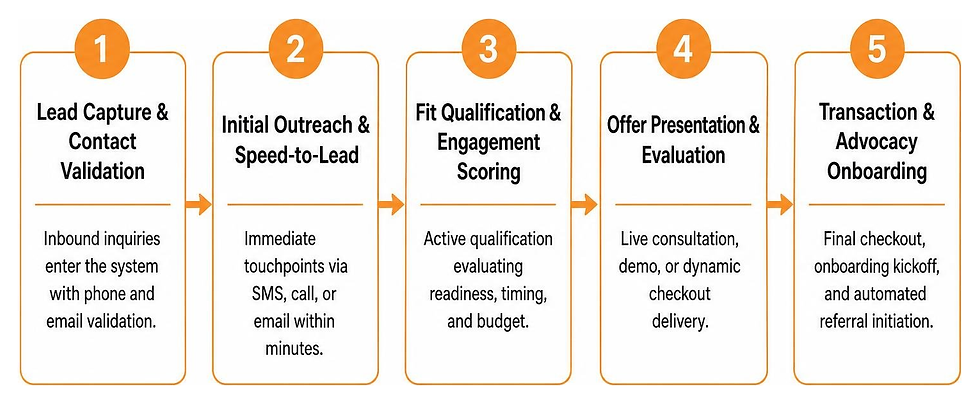
Stage 1: Lead Capture & Contact Validation – Inbound inquiries enter the system with phone and email validation.
Stage 2: Initial Outreach & Speed-to-Lead – Immediate touchpoints via SMS, call, or email within minutes.
Stage 3: Fit Qualification & Engagement Scoring – Active qualification evaluating readiness, timing, and budget.
Stage 4: Offer Presentation & Evaluation – Live consultation, demo, or dynamic checkout delivery.
Stage 5: Transaction & Advocacy Onboarding – Final checkout, onboarding kickoff, and automated referral initiation.
For a broader perspective on pipeline architecture benchmarks, review the framework outlined in B2C Sales Pipeline: How to Build One in 2026.
B2C Sales Pipeline vs. Sales Funnel: Key Distinctions
It is common to hear operators use "funnel" and "pipeline" interchangeably, but conflating them harms revenue operations.
A sales funnel reflects the buyer’s internal journey—their evolution from unaware to problem-aware, solution-aware, and finally ready to purchase. In contrast, a sales pipeline reflects the seller’s operational workflow. The pipeline tracks concrete operational actions: records updated, messages delivered, discovery calls scheduled, proposals reviewed, and transactions executed.

When you manage the pipeline effectively, you gain clear visibility into operational bottlenecks, showing exactly where manual follow-ups stall or where automated cadences fail to advance prospects.
The 5 Essential Stages of an Optimized B2C Sales Pipeline
Building an engine that reliably generates conversions requires mapping every deal milestone inside your CRM. A high-performing client acquisition funnel aligns closely with these five structured pipeline stages to ensure no deal falls through the cracks.
1. Lead In and Immediate First Contact
The first stage begins the moment contact data enters your system through paid media, organic channels, or interactive assessment pages. The primary metric governing this stage is speed-to-lead.
Data from the InsideSales Lead Response Study demonstrates that contacting inbound inquiries within 5 minutes makes teams 8× more likely to convert them compared to waiting 30 minutes. Additional research shows that responding inside five minutes yields a 100× higher connection rate and makes you 21× more likely to qualify the prospect.
Yet, industry reports show that roughly 57.1% of initial contact attempts happen after more than a week, and only 0.1% of inbound leads receive outreach within five minutes. Setting up automated SMS confirmations and instant rep routing inside your CRM for B2C Business solves this gap instantly.
2. Lead Qualification and Engagement Scoring
Once first contact is established, we must identify the top segment of prospects ready to take action. Managing consumer lead volume requires dynamic engagement scoring rather than treating every inquiry with identical manual effort.
Implement a numeric scoring system (0–100 scale) to categorize leads by interest level:
Cold (0–25 points): Low digital activity; enrolled in background automated nurture sequences.
Warm (26–60 points): Opens routine emails, visits program overviews, clicks specific links (+5 to +10 points per interaction).
Hot (61–100 points): Completes detailed assessment questionnaires, visits pricing pages, or requests consultation slots (+20 to +30 points).
To ensure your CRM pipeline stays accurate, apply automated score decay (-5 points after 30 days of inactivity; an additional -10 points after 60 days). This ensures your sales team prioritizes ready to buy leads who display active buying behavior right now.
3. Consultation, Demo, or Product Evaluation
For high-ticket B2C services, executive advisory programs, and premium consumer goods, prospects usually require a live evaluation stage before purchasing.
Consumer decisions are heavily reinforced by third-party credibility. Research shows that 93% of consumers read reviews before making a purchase, and 43% of customers are more likely to trust User-Generated Content (UGC) than brand-produced marketing videos.
During this stage, leverage targeted lead nurturing services to deliver authentic video case studies, client success stories, and objective comparison sheets directly into your follow-up workflows.
4. Checkout, Commitment, and Closing
The conversion moment must be as frictionless as possible. Any unnecessary hurdle in the purchasing interface causes immediate drop-offs.
Key execution tactics for the checkout stage include:
Frictionless Checkout Paths: Offer guest checkout options and 1-click digital wallet integrations (Apple Pay, Google Pay). Enabling multiple modern payment options often converts 2–3× higher than traditional credit-card-only forms.
Transparent Cost Structures: Clearly present all pricing, taxes, or payment terms upfront to prevent unexpected friction at checkout.
Cart Abandonment Recovery: The average conversion rate for abandoned cart email cadences sits at around 10%. Trigger multi-step recovery sequences (at 1 hour, 24 hours, and 48 hours post-abandonment) to recover high-intent buyers who paused right before payment.
5. Post-Purchase Retention and Advocacy Loops
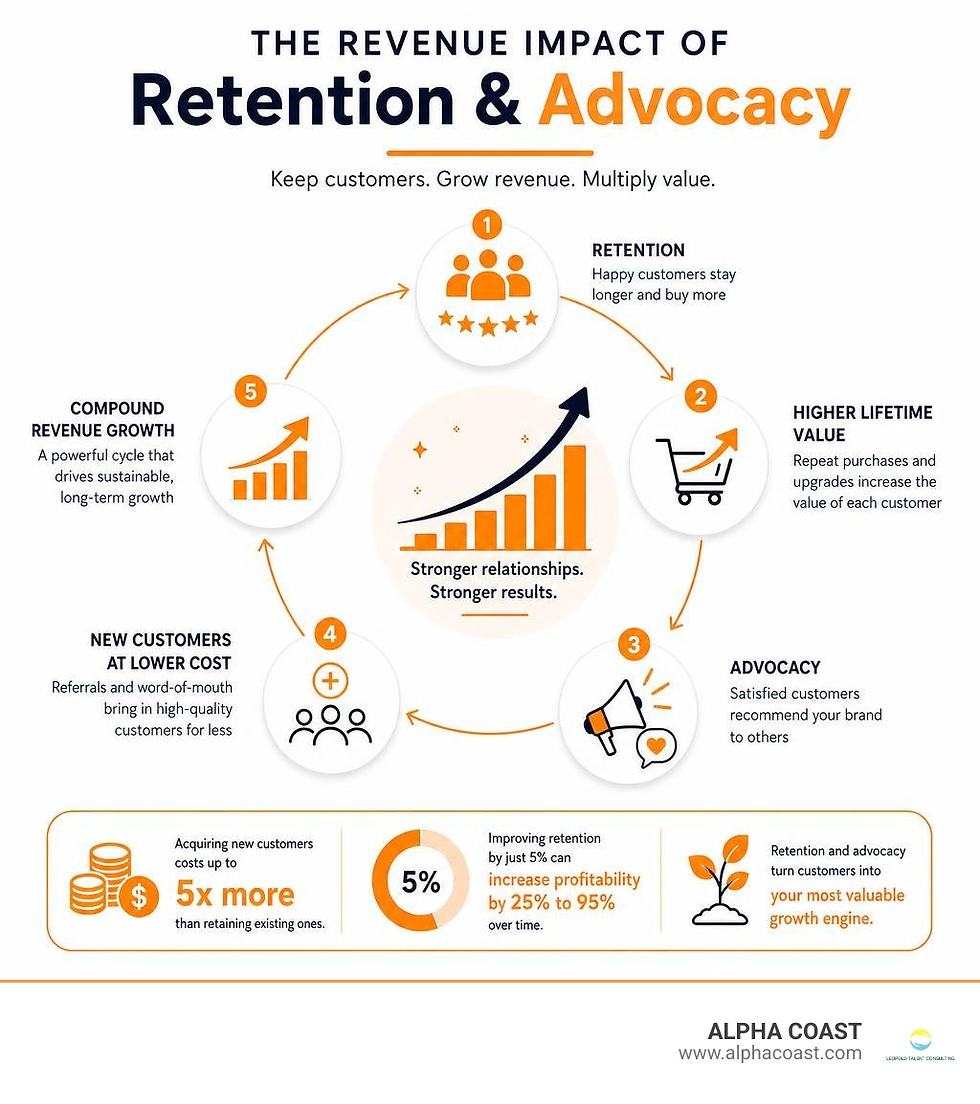
Closing the deal is simply the start of long-term customer value. Research shows that the cost of acquiring new customers is five times higher than retaining existing ones. Furthermore, improving your customer retention rate by just 5% can increase overall profitability by 25% to 95% over time.
Integrate post-purchase workflows into your pipeline architecture by applying established customer acquisition and retention strategies. Automate post-purchase onboarding check-ins, send satisfaction surveys within the first 14 days, and deploy structured referral invites once a customer achieves a clear milestone.
Advanced Tactics to Accelerate B2C Pipeline Velocity

Multi-Touch Follow-Up Cadences and Response Optimization
Most sales reps give up after two or three attempts, leaving significant revenue behind. A structured consumer outreach cadence combines phone, SMS, and email touchpoints over a focused 7-day window.
Below is an example 7-day, 8-touch cadence optimized for inbound consumer inquiries:
Day 1 (Minute 0–5): Automated instant SMS confirmation + immediate phone outreach.
Day 1 (Hour 2): Personalized introductory email with link to direct booking calendar.
Day 2: Mid-day SMS follow-up sharing a relevant client transformation story.
Day 3: Morning phone check-in + value-focused email sharing a short educational breakdown.
Day 5: Afternoon SMS asking if they have questions about program deliverables.
Day 7: Final "closing the loop" email and SMS offering an open calendar slot for the upcoming week.
Ensure all automated messaging adheres strictly to TCPA compliance guidelines with clear opt-out options. Implementing automated client outreach guarantees persistent, professional follow-up across your entire pipeline without draining manual hours.
AI Automation and Hyper-Personalized Workflows
Consumer expectations around personalization have evolved dramatically. Studies show that over 70% of consumers now expect personalized experiences from the businesses they engage with, and brands that personalize communications across their primary channels retain almost 90% of their customers.
Deploying AI-driven routing allows incoming consumer inquiries to be instantly categorized by urgency, demographic fit, and past engagement history. These systems dynamically adjust email copy, recommend custom program tiers, and trigger instant follow-ups based on real-time interactions, driving predictable revenue growth.
Managing, Measuring, and Cleaning Your Consumer Sales Pipeline

Core B2C Pipeline Metrics and Health KPIs
To evaluate pipeline health and maintain an accurate revenue forecast, track these primary performance indicators:
Stage-by-Stage Conversion Rate: The percentage of prospects moving successfully from one stage to the next.
Average Lead Age: The total time a prospect remains in a specific stage before moving forward or exiting.
Pipeline Velocity: The speed at which an inbound opportunity moves through the entire pipeline to a closed deal.
Pipeline Coverage Ratio: The total value of qualified opportunities relative to your monthly or quarterly revenue target.
Disqualification Rate: The percentage of initial leads filtered out early due to lack of fit, protecting your sales team's calendar time.
Maintaining and Cleaning Your B2C Sales Pipeline for Accurate Forecasting
A pipeline cluttered with uncontacted or unresponsive records distorts revenue forecasts and wastes time.
Keep your pipeline healthy with these regular hygiene practices:
Separate Disqualified Leads from Closed-Lost: Categorize unengaged or bad-fit contacts as "Disqualified" at the qualification stage. Reserving "Closed-Lost" strictly for qualified prospects who chose not to buy ensures your close-rate calculations remain accurate.
Enforce Inactivity Rules: Automatically archive deals that remain completely unresponsive after your standard 7- to 10-day outreach sequence into a long-term automated nurture list.
Standardize CRM Activity Fields: Mandate explicit "Next Action" and "Next Step Due Date" fields for every active opportunity inside your CRM.
Frequently Asked Questions About B2C Sales Pipelines
How many stages should a typical consumer sales pipeline have?
Most B2C businesses operate best with four to six stages. Solo practitioners and specialized coaches can easily manage four core stages: New Lead In, Qualified / Discovery, Consultation / Proposal, and Closed-Won. Only add intermediate stages (such as Assessment Review or Trial Session) if they represent a concrete decision milestone in your sales cycle.
What is considered a healthy close rate in high-ticket B2C sales?
In high-ticket B2C environments ($1,500 to $10,000+ offerings), a healthy close rate typically ranges between 15% and 25% of qualified consultations. If your calculated win rate appears below 8%, verify whether unqualified top-of-funnel leads are improperly inflating your active deal pipeline stages.
When should a business transition from spreadsheets to a dedicated CRM?
Spreadsheets work well during early validation phases. However, you should transition to a dedicated CRM once you manage more than 50 active inquiries concurrently, when multiple team members touch opportunities, or when manual follow-ups start slipping through the cracks.
Conclusion
A high-performing consumer sales pipeline turns unpredictable lead flow into a structured, trackable revenue system. By enforcing rapid speed-to-lead, scoring prospect engagement, eliminating checkout friction, and maintaining pipeline hygiene, you build a dependable process from initial contact to checkout.
At Alpha Coast, our white-glove Client Accelerator system implements automated infrastructure and done-for-you client acquisition specifically tailored for career and executive coaches. We identify, qualify, and route only the top 3% ready-to-buy clients directly into your calendar, allowing you to focus on client delivery and business growth.
To explore additional strategies for structuring high-converting client journeys, check out our comprehensive sales funnel guide for coaches and start building a more predictable revenue engine today.



Comments