

Sales Coaching Software Comparison for High-Growth Sales Teams

Choose Sales Coaching Software That Reinforces Real Selling Skills

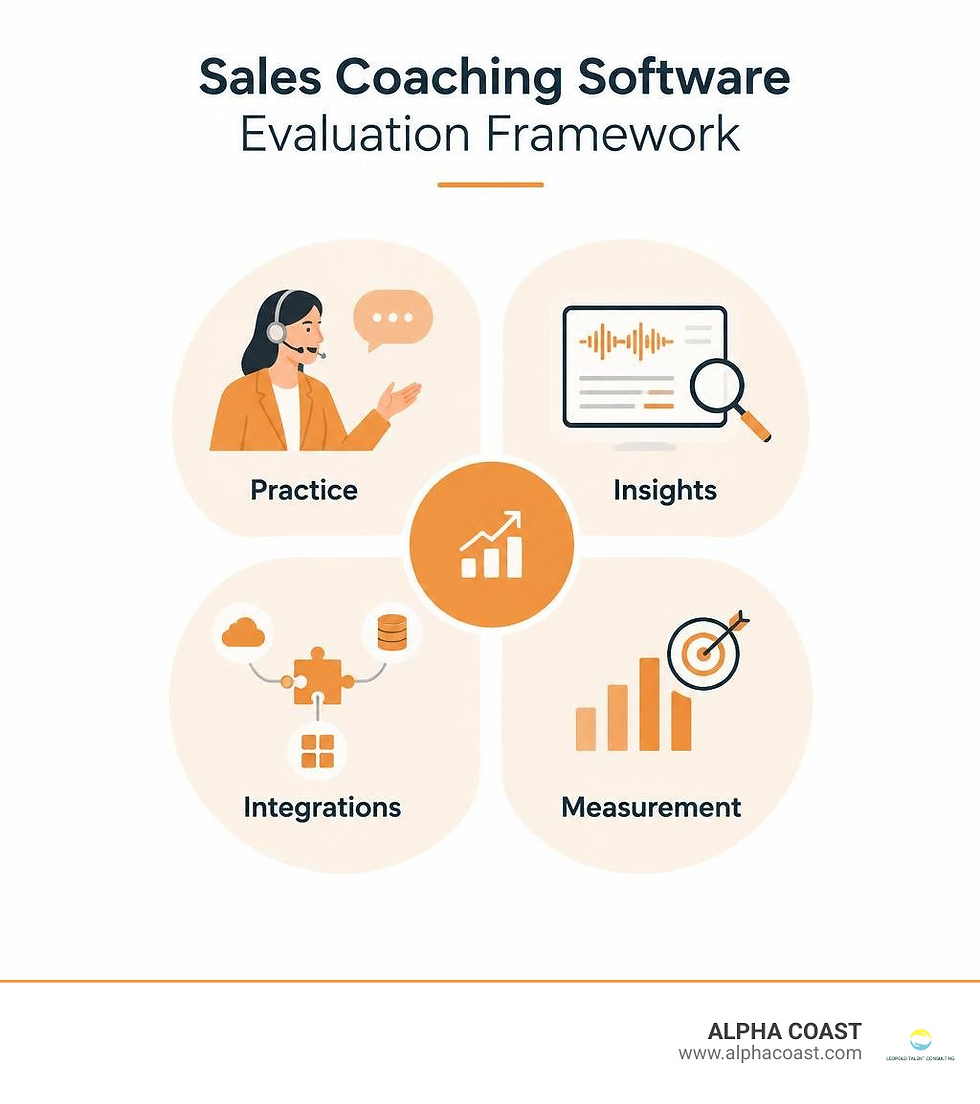
To evaluate sales coaching software, start with the workflow your team needs most: call review, practice and roleplay, manager feedback, or onboarding. Then choose a platform that can connect coaching activity to CRM data and measurable outcomes - such as faster time to readiness, stronger conversion rates, and more consistent pipeline execution.
Look for these essentials:
Practice and roleplay tools that let reps rehearse discovery, demos, and objection handling.
Call or conversation analysis that finds coaching moments in real buyer conversations.
Clear scorecards and skill benchmarks tied to your sales process, not generic training scores.
CRM and sales-tool integrations so managers can see readiness alongside deal and pipeline data.
Personalized coaching plans that help each rep improve the specific behaviors holding them back.
Security and permissions that match the sensitivity of your customer and call data.
The biggest difference between modern coaching platforms and traditional workshops is repetition. A workshop can teach a framework once. Good software gives reps a way to practice it, receive feedback, apply it on calls, and improve over time. For coaches and service firms building sales teams, that creates a more reliable path from training investment to better client conversations.
I'm Kent Vanho, founder of Alpha Coast, where I have helped more than 400 coaches, recruiters, and consultants build more predictable client-acquisition systems. My work with sales coaching software centers on the practical question that matters most: whether a tool helps people turn stronger messaging, better follow-up, and real buyer intent into repeatable revenue.
Key Capabilities to Look for in Sales Coaching Software
Selecting the right sales coaching platform requires looking past flashy interfaces and focusing squarely on deal inspection, conversational analytics, and automated scoring capabilities. High-growth sales teams cannot afford to let managers spend twenty hours every week listening to full-length call recordings just to uncover a single coaching moment. Modern platforms ingest live buyer interactions, highlight friction points, and provide immediate visibility into pipeline execution.
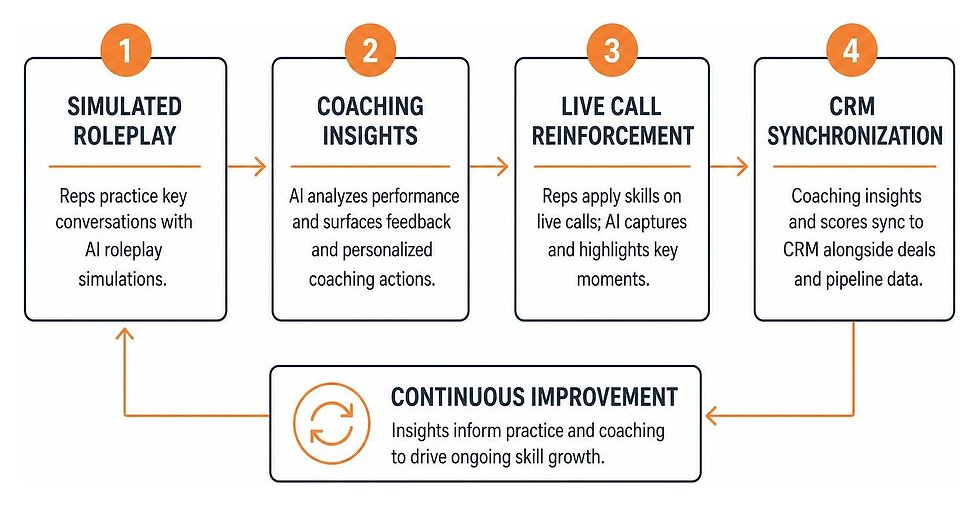
A primary capability is seamless CRM synchronization. When coaching metrics live in isolation from deal progress, managers struggle to correlate skill development with bottom-line revenue. By tying dynamic scorecards directly into lead records and opportunity stages, as outlined in our inside sales coaching guide, leadership gains an objective view of how specific rep behaviors impact deal velocity.
Equally vital is rep autonomy. Top-performing sales coaching systems do not merely serve as monitoring dashboards for upper management; they empower individual sellers to self-assess, review their own call snippets, and run targeted simulations before high-stakes presentations.
Core Capabilities of Enterprise Sales Coaching Software
Enterprise environments demand infrastructure that supports structured skill benchmarking and 360-degree assessments. These assessments combine peer reviews, manager feedback, and real-world meeting data to map out an objective baseline for every rep across your organization.
Modern AI-powered coaching platforms integrate these assessments directly into everyday enablement workflows. Instead of relying on static annual reviews, teams use consistent rubric scoring to identify exact knowledge gaps—such as pricing negotiation or technical discovery—enabling structured leadership sales coaching that targets measurable behavioral change rather than subjective opinions.
Evaluating Practice Modules and Roleplay Simulations
Static call scripts have a habit of falling apart the moment a prospect throws an unexpected objection. That is why next-generation practice environments incorporate dynamic multi-persona simulations. These tools allow reps to practice realistic conversations against simulated buyer personas with distinct motives and personality traits.
Using realistic scenarios to practice handling pushback helps sellers internalize core messaging before speaking with prospective buyers. When preparing business development reps for outbound outreach, pairing dynamic simulations with refined scripts for B2B appointment setting ensures reps achieve conversational fluency, reduce hesitation, and protect valuable pipeline opportunities.
Comparing Top Platform Architectures: Conversation Intelligence vs AI Simulators
Sales coaching technology generally falls into three main architectural categories: post-call conversation intelligence engines, interactive AI roleplay simulators, and end-to-end sales enablement suites. Each architecture serves a distinct stage of seller development.

Platform Architecture | Core Focus | Primary Strengths | Ideal Use Case |
Conversation Intelligence | Real-call analysis, NLP deal summaries, buyer sentiment | Automated call transcription, objection tagging, pipeline health signals | Mid-market and enterprise teams analyzing live customer calls |
AI Roleplay Simulators | Pre-call practice, branching voice bots, pitch scoring | Unlimited safe practice, zero risk to live pipeline, 25+ language support | Onboarding new hires, rapid pitch certification, objection rehearsal |
Full-Stack Enablement Suites | Content management, structured LMS paths, integrated coaching | Unified data model, direct collateral mapping, end-to-end rep tracking | Large enterprises needing centralized training, content, and coaching |
Some platforms provide multimodal assessments spanning video, audio, and screenshares to evaluate presentation delivery alongside messaging accuracy. Choosing between these architectures comes down to whether your primary bottleneck is onboarding ramp time, call execution consistency, or ongoing pipeline risk detection.
Real-Time Call Guidance and Pipeline Intelligence
Conversation intelligence platforms monitor live calls to deliver contextual guidance cards, track competitor mentions, and highlight deal risk signals directly on manager dashboards. For example, some platforms use natural language processing to extract winning patterns from top performers and replicate those behaviors across the rest of the team.
This systematic identification of deal signals is critical when managing complex sales cycles. When deals involve multiple buying committee members, mastering advanced techniques outlined in our high-ticket closing guide ensures reps ask the right discovery questions, identify true decision-makers, and prevent deals from stalling in late pipeline stages.
Enterprise Compliance and Regulated Industry Solutions
In heavily regulated markets such as life sciences, insurance, and financial services, standard off-the-shelf coaching tools can pose serious data privacy and regulatory risks. Leading enterprise solutions provide private LLM deployments, SOC 2 Type II compliance, and real-time scoring against pre-cleared regulatory libraries.
High-growth organizations scaling structured high-ticket sales coaching programs must ensure that roleplays and real-call reviews enforce strict compliance standards. Furthermore, interactive platforms can simulate complex, multi-stakeholder interactions without exposing sensitive customer data to public machine learning models.
Implementing Coaching Technology Across Your Revenue Tech Stack
Successful rollout of sales coaching technology requires deep integration into your daily operating cadence. Embedding coaching workflows directly into calendar invites, dialers, and video conferencing tools prevents the friction of context-switching that often derails software adoption.

When coaching platforms sync bidirectionally with your CRM, every outbound interaction and discovery call feeds into a continuous improvement loop. Whether your reps focus on structured appointment setting for sales calls or managing complex enterprise demonstrations, linking coaching metrics to stage-by-stage conversion rates builds the operational visibility needed for predictable revenue growth.
Measuring the ROI of Sales Coaching Software Across the Pipeline
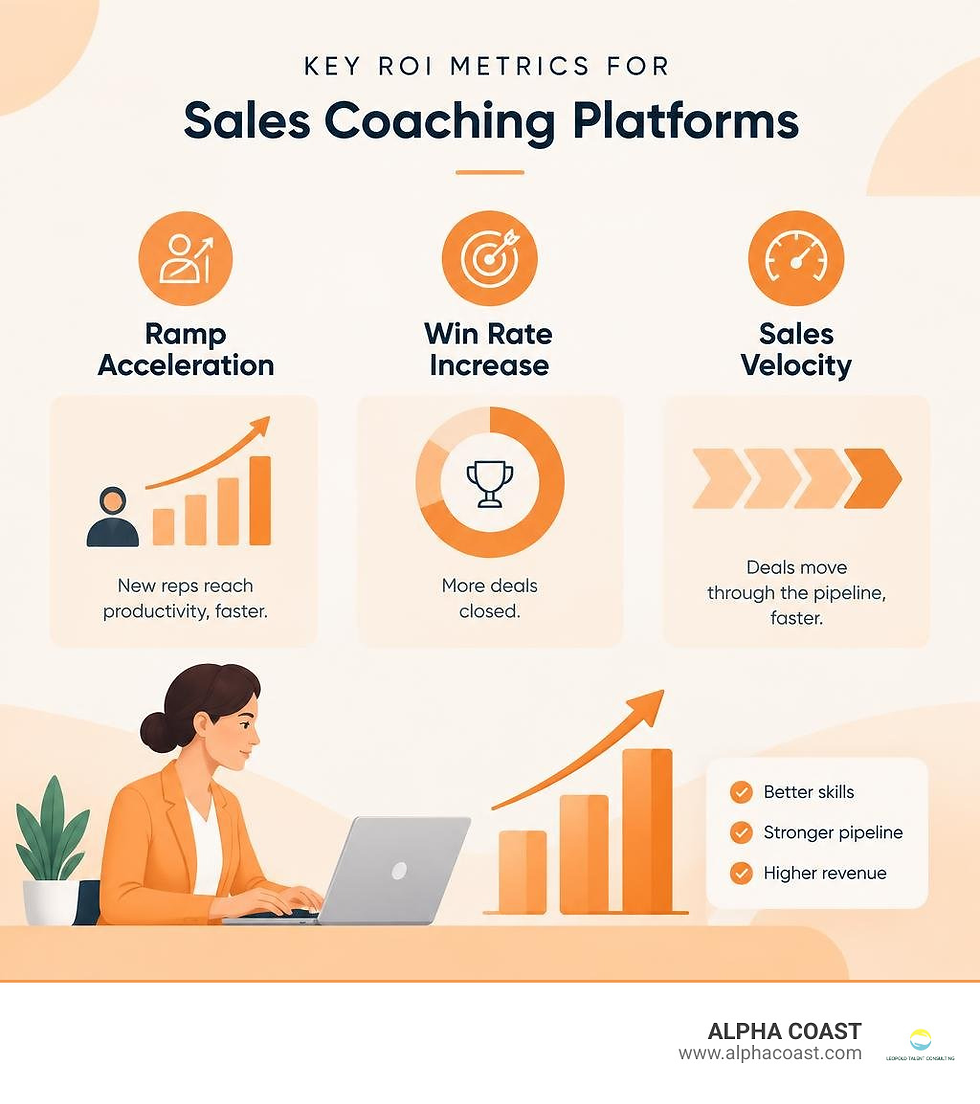
To prove the financial return of sales coaching software, revenue leaders must track leading behavioral metrics alongside lagging pipeline outcomes. Relying purely on closed-won revenue masks the early indicators of whether a coaching program is truly taking root.
We recommend tracking these primary metrics:
Ramp Velocity and Time-to-Productivity: Measuring how quickly newly onboarded reps achieve their first qualified discovery call or closed deal. Automated simulation environments regularly compress ramp times by 30% to 50%.
Stage-to-Stage Pipeline Conversion: Tracking the percentage of qualified leads that progress through each stage of your sales funnel after coaching interventions.
Objection Handling Efficiency: Monitoring natural language processing tags on live calls to verify whether reps consistently follow approved objection frameworks.
Overall Quota Attainment Distribution: Measuring the shift in performance across your core middle-tier reps, which serves as the ultimate test of effective business growth coaching.
Frequently Asked Questions About Sales Coaching Platforms
How does sales coaching software differ from a standard LMS?
A traditional Learning Management System (LMS) tracks passive course completion, video views, and quiz scores. In contrast, sales coaching software focuses on active skill application, dynamic roleplay simulations, real-world call analysis, and continuous behavioral reinforcement tied to pipeline outcomes.
What is the typical timeline to see measurable ROI from coaching tools?
Most sales organizations observe early leading indicators—such as increased roleplay practice volume and improved pitch scoring—within the first 30 days. Measurable improvements in discovery call conversion, objection handling consistency, and accelerated onboarding ramp times typically materialize between 60 and 90 days following implementation.
How do modern coaching platforms protect sensitive customer conversation data?
Leading enterprise coaching platforms maintain strict zero-retention data privacy standards, SOC 2 Type II certifications, and GDPR compliance. They deploy dedicated private cloud instances and enforce policies ensuring that customer conversation data is never used to train generalized public artificial intelligence models.
Conclusion
Scaling a high-performing sales organization requires shifting from sporadic, subjective advice to systematic behavioral reinforcement. Modern coaching software bridges the gap between high-level sales strategy and day-to-day conversation execution, giving every rep the tools to practice, refine their messaging, and navigate challenging objections with confidence.
At Alpha Coast, we help executive coaches, consultants, and service firm founders turn high-value expertise into scalable client acquisition pipelines. While coaching software equips your internal team to execute calls flawlessly, pairing sharp sales execution with strategic sales coaching for executives ensures you consistently attract, engage, and convert ready-to-buy clients at scale.



Comments